
Why documents matter for health insurance
When you apply for health insurance, the paperwork is often the hardest part. This is especially true for foreigners who need insurance for a visa, a residence card, university, or a new job. One missing page can delay your policy start date, and that can create problems during obtaining health insurance in Poland.
In this guide you will find a practical checklist of the most common documents for health insurance, plus extra items that may be required depending on your status. The focus is on health insurance Poland requirements from the perspective of an insurer: proving identity, legal stay, and the details needed to issue the policy document (certificate/policy/card) correctly.
Core required documents: the universal checklist
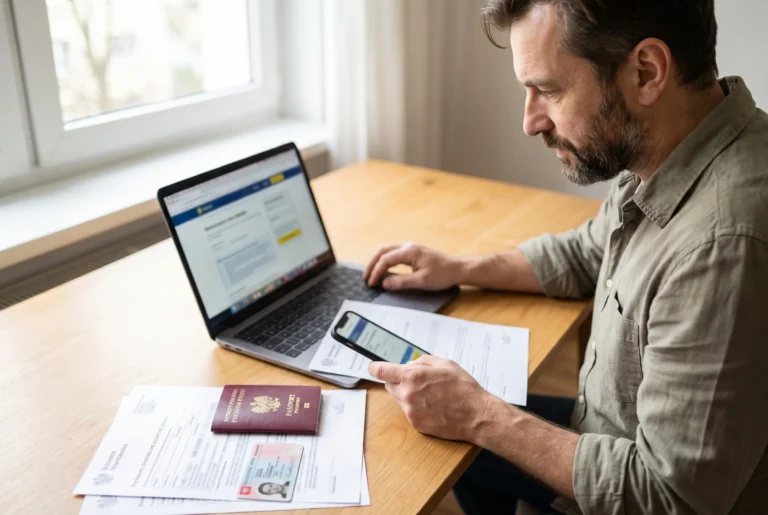
Most insurers in Poland ask for a similar set of basics before they can generate a policy. Think of this as the “minimum package” of required documents for foreigners insurance Poland applications. Even if you buy online, you may need to enter these data exactly as they appear in your documents.
A useful rule: the insurer must be able to identify you, confirm where you are staying, and prepare a correct insurance document (policy/certificate/card) that matches the purpose (visa, residence, travel, work).
💡 Tip
Before you submit the application, double-check spelling and document numbers. A single typo can make the insurance certificate unusable for official procedures.
If you are still comparing options, you may also want to read basics of health insurance to understand what different policies typically cover in Poland.
Extra documents for foreigners in Poland
The exact additional paperwork depends on your legal status and on the insurer’s internal rules. In many policy wordings, when a non-Polish citizen declares Poland as their country of permanent residence, the insurer may expect proof such as a valid temporary or permanent residence card on the policy start date. This is why the “extra” category is so important for obtaining health insurance smoothly.
If you do not yet have a residence card, insurers may accept a passport plus other documents showing legal stay and purpose of stay. Always make sure the policy period matches your planned stay and the requirements of the institution that will review your insurance.
For practical guidance on choosing and validating a policy, see where to find help choosing health insurance and where to get advice.
What you will need when using the policy
After the policy is issued, you may still need documents to actually receive medical services. Many medical networks require you to show the insurance document (policy/certificate/card) and an identity document with a photo. For non-Polish citizens, this is often described as passport or residence card together with the insurer’s e-card or certificate.
This matters because “having insurance” is not the same as “being able to use it at the clinic.” Keep digital and paper copies, and store emergency contact or assistance numbers from your insurer in your phone. If you use a clinic outside the insurer’s network, you may also need approval in advance depending on the plan.
💡 Tip
Take clear photos of your passport and residence card and save them securely. Many clinics can confirm identity faster when details are readable.
Documents for reimbursement and claims
If your plan works on reimbursement (you pay first, then request a refund), documentation becomes critical. Policy conditions often specify what an invoice or receipt must include: your personal data, the medical provider’s data, and a stamp/signature of the doctor or an authorized person. Without these elements, the insurer may ask you to correct the paperwork before processing the claim.
Also remember that documents in a foreign language may need an official translation into Polish for claims handling. If you expect to use care in Poland, ask the clinic for documents in Polish or bilingual format whenever possible.
To understand typical treatment pricing (and why having proper insurance documents matters), you can also read about treatment costs and reimbursement in Poland.
Summary and quick checklist
To avoid delays, prepare your documents for health insurance before you start the purchase. For most foreigners, a passport is essential, and a residence card is a common supporting document. Add your Polish address, correct personal data, and select the right policy period and purpose. That combination usually covers the most frequent required documents during obtaining health insurance in Poland.
Finally, keep your policy certificate and identity document ready for clinic visits, and keep named invoices and medical records if you plan to request reimbursement. If you need help selecting a compliant policy for your situation, use the guidance resources linked above and make sure your health insurance Poland documentation matches the requirements of the office or institution you are dealing with.







 English
 Polish
 Ukrainian
 Turkish
 Russian
 Indonesian
 Vietnamese
 Spanish